Commercial hygiene experts located in Brampton help maintain restaurants, commissaries, bakeries, warehouses, and food service vehicles to sanitation standards. They disinfect high-touch surfaces, food prep surfaces, equipment, floors, drains, restrooms, and preparation zones with certified chemicals, at proper strength, and using documented contact periods.
Important Highlights
- Brampton's sanitation technicians clean for restaurants, grocery departments, commissaries, warehouses, bakeries, schools, mobile vendors, and allergen-sensitive operations.
- They clean high-touch surfaces, food-contact equipment, kitchens, floors, drains, restrooms, and storage areas using zone-based workflows to reduce cross-contamination.
- Checking of approved sanitizer dilution, compatibility, and exposure duration is completed by certified contractors, with completion logged using tests, audits, and corrective-action records.
- Daily, periodic, and annual activities allocated by zone comprise cleaning plans founded on risk, output capacity, format changes, incidents, and guidelines.
- Highlight providers displaying HACCP, sanitation expertise, safety training preparation, insurance, references, colour-coded instruments, and compliance-ready sanitation paperwork.
Which Brampton Facilities Need Food Safety Cleaning?
Any Brampton facility that handles, stores, prepares, packages, or serves food needs hygiene cleaning. You must apply it if your operation falls under health inspection, premises standards, or HACCP protocols. That requirement covers restaurants, cafeterias, commissaries, grocery food departments, butcher shops, seafood counters, convenience stores, and institutional kitchens.
Adherent hygiene cleaning is equally required in supply facilities, manufacturing operations, cold storage areas, bakery retailers, educational nutrition programs, banquet halls, and food delivery hubs. Mobile and temporary establishments apply similarly, including catering vehicles, festival sellers, and pop-up stands. Your facility requires recorded sanitation procedures should your team prepare supplies, portion completed foods, reheat products, or manage allergen records. In Brampton, sanitation remains not elective; it forms lawful, operational, and customer protection adherence.
What Do Brampton Cleaning Experts Clean?
Professional cleaning teams specializing in Brampton sanitize touched surfaces, food preparation areas, ground surfaces, and sanitary facilities in compliance with food safety regulations. Emphasis on these spaces occurs because they pose maximum contamination danger, injury hazards, and compliance issues.
When you know their cleaning scope, you can verify that your facility's cleaning scope meets operational and regulatory requirements.
Important High-Touch Surface Cleaning
create a cleaning plan
verify that sanitization was effective
Cooking Zones, Walking Surfaces, and Restroom Environments
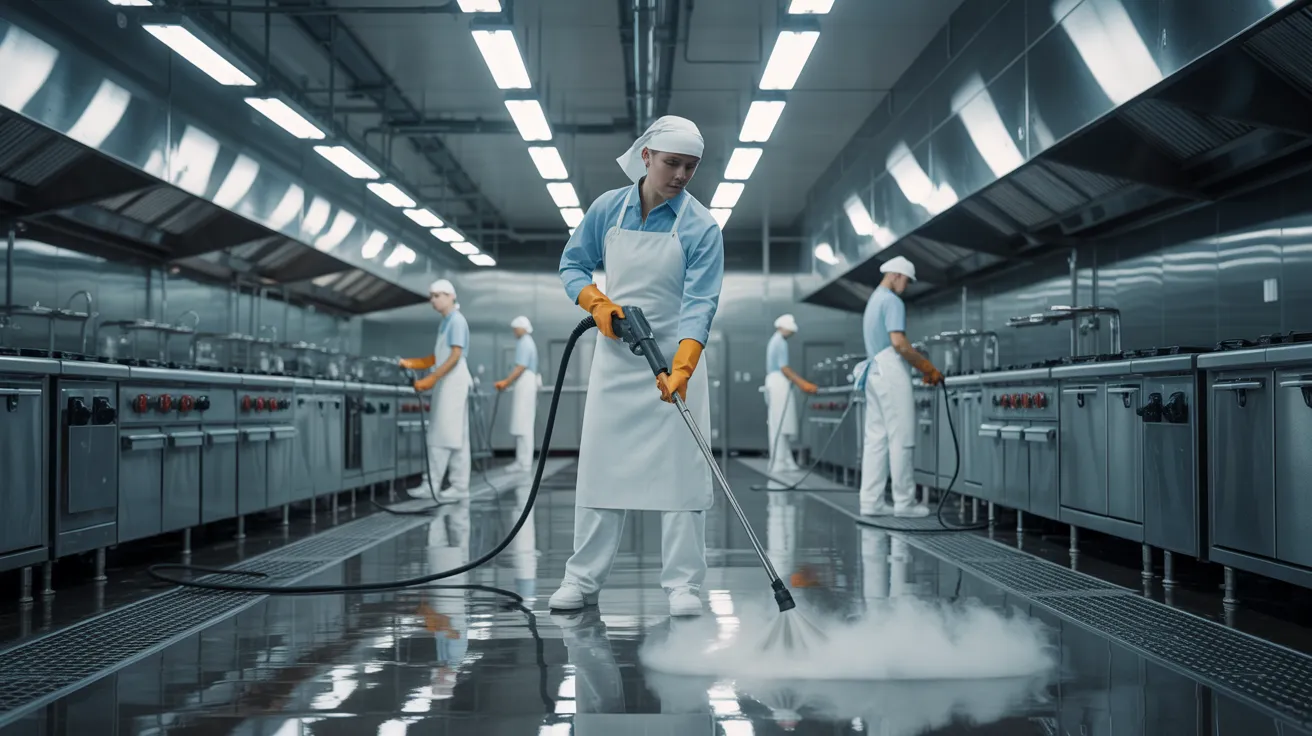
Professional cleaners in Brampton concentrate on kitchens, floors, and restrooms given that each location involves distinct food safety, falling hazards, and public health requirements. In industrial kitchens, you need degreasing on cook lines, equipment exteriors, drains, prep surfaces, and splash zones to reduce contamination and pest pressure.
Professional floor care with documentation is also included. is also provided as part of the service.
For restroom sanitation, cleaners disinfect high-touch surfaces, bathroom fixtures, stall dividers, supply dispensers, and trash receptacles, then replace products and reduce odor. They also maintain restaurant cleaning supply rooms where product storage, sink cleanliness, and drain systems impact daily sanitation standards and worker protection.
Why Food Safety Cleaning Matters in Brampton
To adhere to regulatory mandates and pass inspections, Brampton establishments must maintain food-safe cleaning standards. You also reduce bacterial spread through proper cleaning of food-preparation surfaces, appliances, and frequently-touched items. Most importantly, you safeguard public health by lowering the risk of foodborne illness in your facility.
Food Safety Regulations
Because Brampton food companies operate under strict public health standards, food safety cleaning directly impacts your capacity to satisfy health code requirements, protect customers, and avoid enforcement action. You must maintain sanitized food contact points, written maintenance records, appropriate product handling, and auditable operational standards that meet municipal and provincial inspection expectations.
Excellent cleaning standards promotes allergen reduction by reducing particles on common tools plus commonly contacted zones. If your cleaning standards deteriorate, you risk notices, corrective orders, public perception damage, and possible interruption to service during follow-up inspections or enforcement reviews.
Cross-Contamination Avoidance
Following health code standards depends on your ability to prevent cross-contamination in daily food handling and cleaning. You should isolate raw items from prepared foods, sanitize prep surfaces between tasks, and store chemicals away from food-contact items. Clear procedures reduce transfer risks and support consistent compliance during inspections.
You should implement allergen segregation to keep priority allergens from contacting shared surfaces, containers, or equipment. Employ separate boards, labeled implements, and careful equipment identification so staff don't mix items during preparation or service. Mandate washing hands following raw meat, seafood, eggs, or allergen-containing products. Change cleaning rags frequently, and check disinfectant potency using test kits. When you train staff to follow these controls each work period, you build a more hygienic, secure workplace that meets Brampton's food safety expectations consistently.
Public Health Safeguarding
If proper sanitation declines, you don't merely face potential inspection issues—you boost the probability of pathogenic contamination affecting customers, staff, and the broader Brampton area. You also weaken your role in safeguarding community wellness, especially in high-traffic food premises where contamination can spread quickly through surfaces, equipment, and touchpoints.
You need cleaning protocols that remove soils, disinfect properly, and confirm effectiveness. That requires adhering to exposure periods, using approved disinfectants, recording cleaning times, and training staff to meet regulatory standards. These controls support disease prevention by lowering microbial loads before they reach food or hands. In Brampton, rigorous cleaning protects vulnerable populations, prevents disease spread, and helps you demonstrate proper care. When you clean to standard, you exceed basic requirements—you actively reduce risk and promote secure food handling throughout the region.
Why Is Cleaning Essential for Food Safety Compliance?
Embracing thorough cleaning protocols reinforces food safety compliance by lowering contamination exposure, limiting pathogen development, and keeping your facility aligned with sanitation requirements under HACCP-based programs and public health regulations. You confirm that contact surfaces are visibly clean and microbiologically controlled, enabling documented preventive controls and inspection readiness.
Cleaning initiatives additionally upgrade allergen control by eliminating residues that can trigger undeclared allergen exposure.
When Do You Schedule Commercial Cleaning?
Routines for cleaning are most successful when created based on risk assessment, output volume, and compliance standards instead of just a set calendar.
Schedule drains, ventilation, storage racks, and hard-to-reach areas every week or every month, based on inspection data and sanitation records.
What Should You Look For in Brampton Cleaning Experts?
Start by screening providers against food sanitation standards, not price alone. You should verify that each company understands CFIA, public health, and HACCP-aligned expectations relevant to your facility. Ask for insurance documentation, WHMIS compliance, documented staff training, and supervision practices. Review whether technicians understand cross-contamination risks, chemical handling, and traceable sanitation records.
Additionally, you need to evaluate operational reliability and accountability. Obtain references from food facilities in Brampton, then review service speed, corrective measures, and communication practices. Verify the company conducts supplier reviews and can deliver compliance-ready records when inspectors or external parties need proof. Verify equipment upkeep, colour-coded tools are applied correctly, and location-specific dangers are identified. A qualified provider protects compliance, product integrity, and your brand reputation.
What's covered in a Food Safety Cleaning Plan?
Create a written plan that clearly outlines every sanitation task, standard, and responsibility prior to beginning production. You should document cleaning frequencies, approved chemicals, dilution rates, contact times, tools, and verification methods for each zone, surface, and piece of equipment. Don't forget to add pre-operational inspections, corrective actions, and employee training requirements.
Your plan should also include cross-contamination controls, waste handling, pest-prevention measures, and documented schedules for bathrooms, drainage, ground surfaces, and food-handling zones. Specify how you'll separate raw and ready-to-eat processes, help with ingredient tracking, and copyright accurate allergen labeling through validated cleaning between product changes. You should establish accountability, maintain signed records, and check results against regulatory standards, HACCP controls, and customer requirements. When gaps appear, revise procedures immediately and retrain staff.
Frequently Asked Questions about the Plan
Do cleaning services work during overnight shifts at Brampton facilities?
If you manage regulated spaces, you'll also need documentation that support audits and maintain assurance.
Do Brampton cleaning experts provide hazard containment services?
Yes, you can expect Brampton cleaning experts who offer hazard containment services. They manage hazardous materials, assess risks, isolate affected areas, and start rapid decontamination to reduce exposure and prevent business interruption. You should confirm response times, professional credentials, PPE protocols, and waste management. If your facility must comply with industry standards, choose a provider that records events, maintains regulatory procedures, and supports audit readiness.
Can eco-friendly disinfectants be utilized safely on surfaces contacting food?
Yes, green disinfectants can be appropriate for food-contact surfaces if you pick items marked food-safe and regulatory compliant. You should confirm exposure duration, concentration levels, and rinse protocols before application. Many botanical formulations minimize chemical hazards, but you still need proof of efficacy against relevant pathogens. To ensure review now residue-free conditions, you need to follow exact manufacturer guidelines and verify the cleaning agent meets food industry regulations.
Can cleaning schedules flex with seasonal variations?
Absolutely, cleaning schedules allow customization for seasonal shifts. Modify schedules, staff levels, chemicals, and testing procedures to fit seasonal patterns while upholding regulatory adherence. Decrease production downtime through scheduling sanitation amid changeovers, peak volumes, and usage patterns. Further modify standard operating procedures, employee training, and facility monitoring to account for temporary risks, emerging allergens, or increased soil loads. Continuous reviews keep your program effective.
Will professional cleaning services train your staff on hygiene best practices?
Yes, professional cleaning services typically educate your staff on hygiene standards. You receive employee instruction on proper chemical use, exposure periods, contamination control, equipment disassembly, and record keeping. They generally follow instruction with HACCP, GMP, and CFIA or regional health department regulations. Many also conduct hygiene inspections to verify compliance, identify gaps, and reinforce corrective actions. This helps you maintain consistent procedures, succeed in audits, and minimize contamination hazards regularly.
Conclusion
When you work with Brampton commercial cleaning and food safety experts, you don't just tidy up—you maintain your facility audit-prepared and your protocols compliant. From kitchens to processing floors, every clean surface and maintained area minimizes pest intrusion and avoid expensive problems. By scheduling service at the right intervals and adhering to a detailed cleaning schedule, you protect employees, customers, and your reputation. In a strict regulatory setting, sanitary conditions aren't optional—they're part of doing business right.